
What is SEO in digital marketing — and why does every serious business invest in it? SEO (search engine optimization) is the practice of making your website visible in Google when people search for topics relevant to your business. This guide breaks down what is SEO in digital marketing in plain English — no jargon, no fluff, just what works.
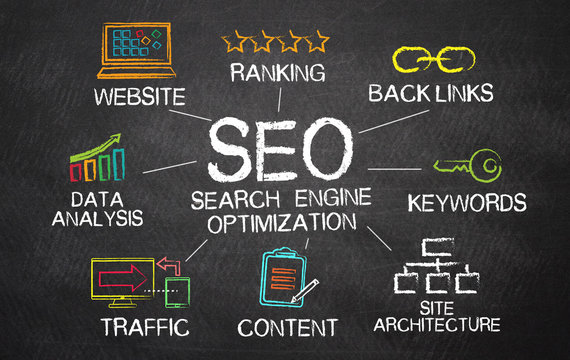
SEO — search engine optimization — is the practice of making your website visible in Google and other search engines when people search for topics relevant to your business. In digital marketing, it’s the channel that earns you traffic without paying per click. When someone searches « best accounting software for freelancers » and lands on your page, that’s SEO working. It’s not magic — it’s a system: the right content, structured correctly, backed by genuine authority. And unlike ads, the results don’t stop the moment your budget does.
68%
of online experiences start with a search engine
53%
of all website traffic comes from organic search
14.6%
close rate for SEO leads vs 1.7% for outbound
27%
of clicks go to the #1 Google result on any page
Many business owners ask what is SEO in digital marketing before committing to it — the short answer is it’s your highest-ROI long-term channel.
Google Search Central — How Google Search Works URL: https://developers.google.com/search/docs/fundamentals/how-search-works
Understanding what is SEO in digital marketing is the first step every business must take before investing in any online channel.
Why SEO matters in digital marketing
Every digital marketing channel has a cost structure. Paid ads cost per click. Social media costs time and creative budget. Email requires a list you have to build. SEO’s cost is primarily effort and expertise — and its returns are cumulative.
The benefits of SEO for business go beyond traffic volume. Consider what organic rankings actually deliver:
- →Qualified intent. People who find you via search are actively looking — not passively scrolling. Higher purchase intent, lower friction.
- →Compounding returns. A blog post that ranks today can drive traffic for years, unlike an ad that stops the moment spend pauses.
- →Brand authority. Ranking for the questions your audience asks positions your brand as the credible expert in your space.
- →Lower CAC over time. As organic traffic grows, your cost-per-acquisition falls — often dramatically compared to paid channels.
🔗 Internal link:https://akash-guru.com/services/
When you truly understand what is SEO in digital marketing, you stop guessing and start building traffic that compounds every month.
How What Is SEO in Digital Marketing Actually Works
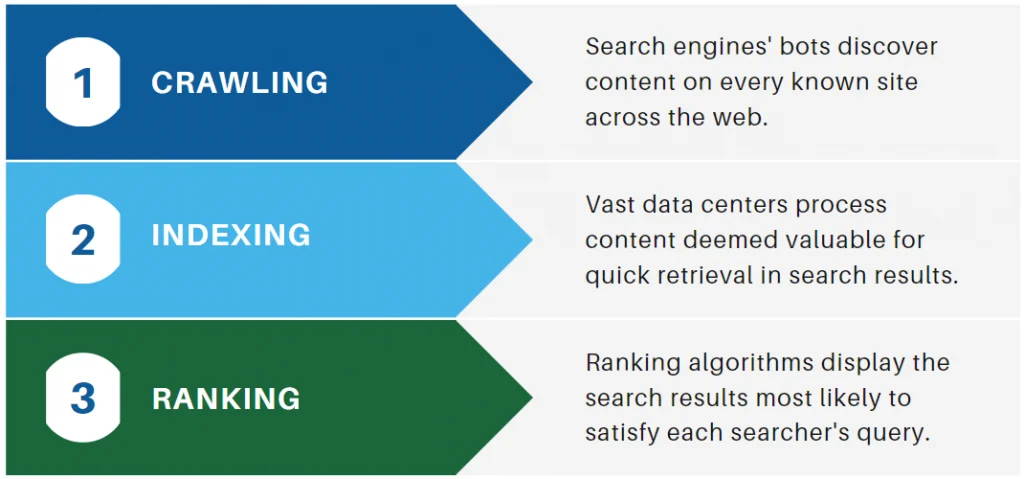
Understanding this is the foundation of every effective SEO strategy for beginners. Search engines operate in three stages:
Crawling — discovering your pages
Google deploys automated bots (« crawlers ») that follow links across the web to discover pages. If your site has broken links, blocked pages, or a poor internal linking structure, crawlers can’t explore it fully — and what Google can’t find, it can’t rank. Your sitemap and robots.txt file directly influence this stage.
Indexing — understanding your content
Once a page is crawled, Google processes and stores its content in the index — a database of hundreds of billions of web pages. For proper indexing: avoid duplicate content, use canonical tags where needed, ensure your pages have meaningful content (not just thin filler), and set accurate meta directives. Pages not in the index are invisible in search results, full stop.
Ranking — choosing the best answer
When someone types a query, Google’s algorithm scores all indexed pages against that query using 200+ signals — content relevance, page authority, user experience, recency, and more. Your SEO work is essentially optimizing your score across those signals. The algorithm is updated hundreds of times per year, but the fundamentals — helpful content and genuine authority — have remained constant for a decade.
🔗 Internal link:
The four types of SEO — and what each one does
On-page SEO
On-page SEO techniques cover everything within a single page that signals relevance to search engines: title tags, meta descriptions, heading structure (H1 → H2 → H3), keyword placement, content depth, image alt text, and internal linking. It’s the most direct lever you control. A page with strong on-page optimization gives Google a clear, confident understanding of what the content is about and who it’s for.
Key on-page elements to get right on every page:
- Primary keyword in the H1 and within the first 100 words
- Unique, descriptive title tag under 60 characters
- Meta description under 155 characters with a clear value hook
- Semantic keywords and related terms used naturally in the body
- Internal links to related pages on your own site
- Descriptive alt text on all meaningful images
Off-page SEO
This is primarily about backlinks — links from other websites pointing to yours. Google treats each quality backlink as a vote of credibility. Not all links are equal: a mention in a respected industry publication carries far more weight than a directory link. Guest posting, digital PR, original research, and partnerships are the most reliable off-page strategies. Avoid link schemes — Google’s Spam policies are aggressive and penalties are painful to recover from.
Technical SEO
Technical SEO ensures your site’s infrastructure supports crawling, indexing, and user experience. Core Web Vitals https://web.dev/vitals(Largest Contentful Paint, Cumulative Layout Shift, Interaction to Next Paint), mobile responsiveness, HTTPS, structured data (schema markup), and site architecture all fall here. Technical issues don’t just hurt rankings — they compound. A slow site with crawl errors and missing schema is leaving significant ranking potential on the table even if the content is excellent.
Local SEO
If your business serves customers in a specific location, local SEO determines whether you appear in « near me » searches and the Google Maps pack. Optimizing your Google Business Profile, building consistent citations across directories, generating reviews, and publishing location-relevant content are the pillars. For local businesses, ranking in the local pack can deliver more foot traffic than any paid campaign.
Each of these four types answers a different dimension of what is SEO in digital marketing and how it drives results.
🔗 Internal link: On-page SEO checklist — every element, every page [link to checklist]
SEO vs paid ads — which channel should you prioritize?
SEO — organic
- Takes 3–12 months to build traction
- Traffic continues without ongoing spend
- Compounds and scales over time
- Builds brand authority in your niche
- High-intent clicks, lower friction to convert
Paid ads — SEM
- Traffic starts immediately on launch
- Stops the moment spend pauses
- Cost-per-click rises as competition grows
- Excellent for testing and short-term campaigns
- No residual value after campaign ends
The most effective digital marketing strategies use both. Paid ads capture demand now — especially in competitive niches where organic rankings take time to build. SEO builds the long-term asset. By month 18, businesses that invested in SEO early typically see their blended cost-per-acquisition fall significantly as organic traffic carries more of the load.
🔗 Internal link: SEO vs Google Ads — a 12-month ROI comparison [link to comparison post]
How to get started with SEO — a step-by-step strategy
This is the section most beginners skip straight to — and that’s fine. Here’s a practical SEO strategy for beginners that maps to how real rankings are built.
- Run a technical audit first. Before creating content, fix the foundation. Use Google Search Console to identify crawl errors, indexing issues, and Core Web Vitals failures. Tools like Screaming Frog or Ahrefs Site Audit give a complete picture. Slow pages and broken structure undermine everything else.
- Research keywords by intent, not just volume. Find what your audience actually searches, then categorize each keyword by intent — informational (how-to, what is), commercial (best, compare), or transactional (buy, hire, pricing). Create content that matches intent precisely. A transactional page written like a blog post won’t rank for buyer-intent queries.
- Create one high-quality page per keyword cluster. Depth beats breadth. One comprehensive, well-structured page targeting a keyword cluster outperforms five thin pages on related topics. Include original insight, specific examples, and structured headings. Write for the person who knows nothing and the person who knows a lot — both land on the same page.
- Optimize on-page elements on every page. Apply the on-page SEO techniques checklist above: correct title tag, meta description, heading hierarchy, keyword placement, internal links, and image alt text. These are table stakes — not ranking boosters, but without them you’re competing with one hand tied behind your back.
- Build authority through E-E-A-T signals. Google’s quality framework — Experience, Expertise, Authoritativeness, Trustworthiness — shapes how it evaluates content in competitive niches. Earn backlinks from reputable sources, publish original data, add author bios with real credentials, display testimonials and case studies, and cite reliable external sources in your content.
- Measure, refresh, and iterate monthly. SEO isn’t set-and-forget. Track rankings, organic sessions, click-through rates, and conversions in Google Search Console and GA4. Update underperforming content, consolidate pages that cannibalize each other, and redirect or delete thin pages with no traffic. The sites that rank long-term treat their content library like a living asset.
The biggest mistake in SEO
Writing content for search engines instead of people. Keyword-stuffed, robotic content that technically hits the right phrases but provides no genuine value is penalized by Google’s Helpful Content system — and rightly so. The pages that rank year after year are the ones that actually answer the question, give a clear recommendation, and leave the reader better informed than before they arrived. Optimize structure for search. Write content for humans.
Knowing what is SEO in digital marketing is one thing — executing it consistently is what separates brands that rank from brands that don’t.
Google’s Search Quality Rater Guidelines URL: https://developers.google.com/search/docs/fundamentals/creating-helpful-contentGoogle’s E-E-A-T quality framework
Every step in this guide brings you closer to mastering what is SEO in digital marketing and turning search traffic into real revenue.Is SEO still relevant in 2025?
With AI-generated answers appearing directly in Google’s search results (AI Overviews), some marketers question SEO’s future. The answer is unequivocally yes — and the reason matters.
Google’s AI Overviews pull directly from well-structured, authoritative web content. Pages optimized with proper schema, clear headings, and E-E-A-T signals are more likely to be cited in these summaries — giving them a new form of visibility that didn’t exist two years ago. Appearing in an AI Overview for a high-volume query, even without a traditional click, builds brand recall at scale.
The fundamentals haven’t changed. What’s changed is the surface area where high-quality content appears. Businesses that invested in SEO before AI Overviews launched are now being featured inside them. Businesses that delayed are playing catch-up — again.
The question of what is SEO in digital marketing has a different answer in 2025 than it did in 2020 — the fundamentals are the same, the surfaces have expanded.
The brands winning in search today are the ones who understood what is SEO in digital marketing early and built their strategy around it consistently.
Frequently asked questions
If you still have questions about what is SEO in digital marketing, the FAQ section below covers the most common ones we hear from businesses getting started.
WHAT IS THE DIFFERANCE BETWEEN SEO & SEM?
SEO (search engine optimization) earns traffic organically through content quality, site structure, and authority — you pay no fee per visitor. SEM (search engine marketing) is the broader category that includes paid search advertising (Google Ads, Bing Ads). SEO builds a long-term asset; SEM delivers immediate visibility that stops when spend stops. Most businesses benefit from both: SEM captures demand now while SEO builds sustainable reach over time.
HOW LONG DOES SEO TAKES TO SHOW RESULT?
Most businesses see meaningful traction within 3 to 6 months, and consistent, compounding growth within 6 to 12 months. The timeline depends on your domain’s existing authority, how competitive your target keywords are, how frequently you publish, and how quickly technical issues are resolved. New domains with no backlink profile take longer. Established domains with a solid foundation can move faster — especially targeting lower-competition keyword clusters first.
IS SEO STILL RELEVENT IN 2025?
Yes — and arguably more so. Google processes over 8.5 billion searches per day. AI Overviews now pull from high-quality, well-structured web content, meaning good SEO increases your chance of appearing inside AI-generated answers. Voice search, featured snippets, and local packs all reward the same core SEO principles. The businesses that treated SEO as optional in 2022–23 are now scrambling to catch up on ground that compounds against them daily.
WHAT ARE THE TYPES OF SEO?
The four primary types are: on-page SEO (content, headings, keywords, internal links on individual pages), off-page SEO (backlinks, digital PR, authority signals from other sites), technical SEO (site speed, crawlability, schema markup, mobile responsiveness), and local SEO (Google Business Profile, citations, location-specific content). A complete SEO strategy addresses all four — weakness in any one area limits what the others can achieve.
HOW DO I START SEO FOR MY WEBSITE?
Start with a technical audit (Google Search Console + Screaming Frog). Fix crawl errors and page speed issues first. Then research keywords by search intent, not just volume. Create one high-quality
WHAT IS THE BIGGEST MISTAKE IN SEO?
Writing content for search engines instead of people. Keyword stuffing, thin content that technically targets the right phrases but delivers no real value, and publishing at volume without quality all trigger Google’s Helpful Content system. Pages penalized under this system can lose 80–90% of organic traffic overnight. The other major mistake: ignoring technical SEO entirely and wondering why great content doesn’t rank. Structure and substance must work together.
Ready to turn search traffic into real business growth?
Whether you’re starting from zero or scaling what’s already working, our team builds SEO strategies that go beyond rankings — they drive qualified leads and measurable revenue.
GET A FREE SEO CONSULTATION :https://akash-guru.com/contact/